

Testing for Defence
We provide advanced testing and validation of critical systems for the defence industry. We guarantee full compliance with strict military MIL-STD standards, eliminating the risk of equipment failure in extreme operational conditions.
Compliance with MIL-STD standards
We provide comprehensive testing according to MIL-STD-810G/H to verify environmental resistance and MIL-STD-461G for EMC/EMI.
Thermal and vibration stress
Climatic tests in extreme temperatures combined with dynamic vibration and shock simulation. We verify the structural and thermal integrity of the entire device.
Electromagnetic Compatibility (EMC/EMI)
We use specialized chambers to measure the resistance of electronics to interference, which is crucial for the reliability of communication and sensor systems.
Highly Accelerated Life Testing (HALT/HASS)
We conduct tests to quickly identify weaknesses and determine the actual mean time between failures for reliable long-term deployment.
Durability and compliance testing
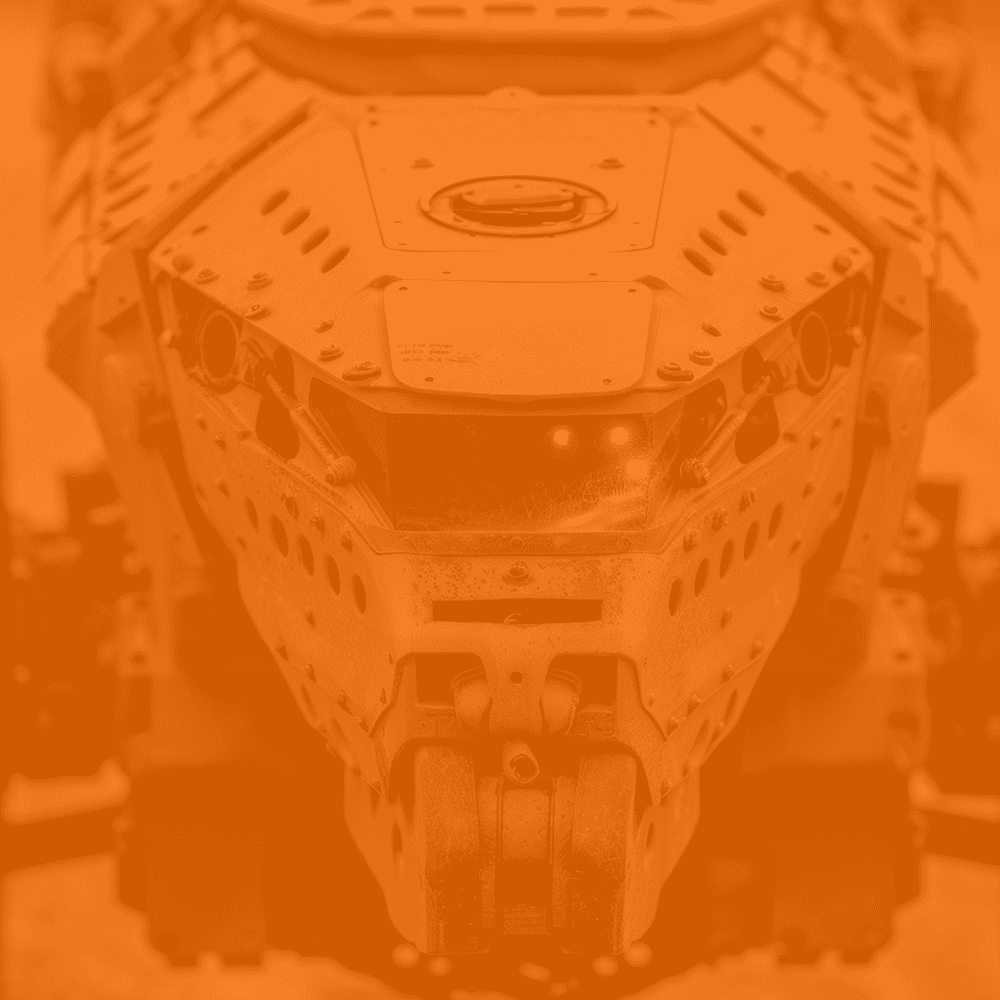
Our testing methodologies go beyond standard quality control. We prove that your components and systems meet strict durability requirements in the most demanding operational and combat conditions.
Software and functionality testing
Beyond verifying physical durability, we focus on the flawless logic and reliability of the software that serves as the brain of every modern defence system.
HIL/SIL testing of critical functions
We test control systems in a simulated environment (Hardware-in-the-Loop/Software-in-the-Loop) for fast and safe verification of complex logic and algorithms.
Safety software testing
We perform mission-critical code testing to ensure that the software operates safely and deterministically under all operating conditions.
Validation of autonomous algorithms
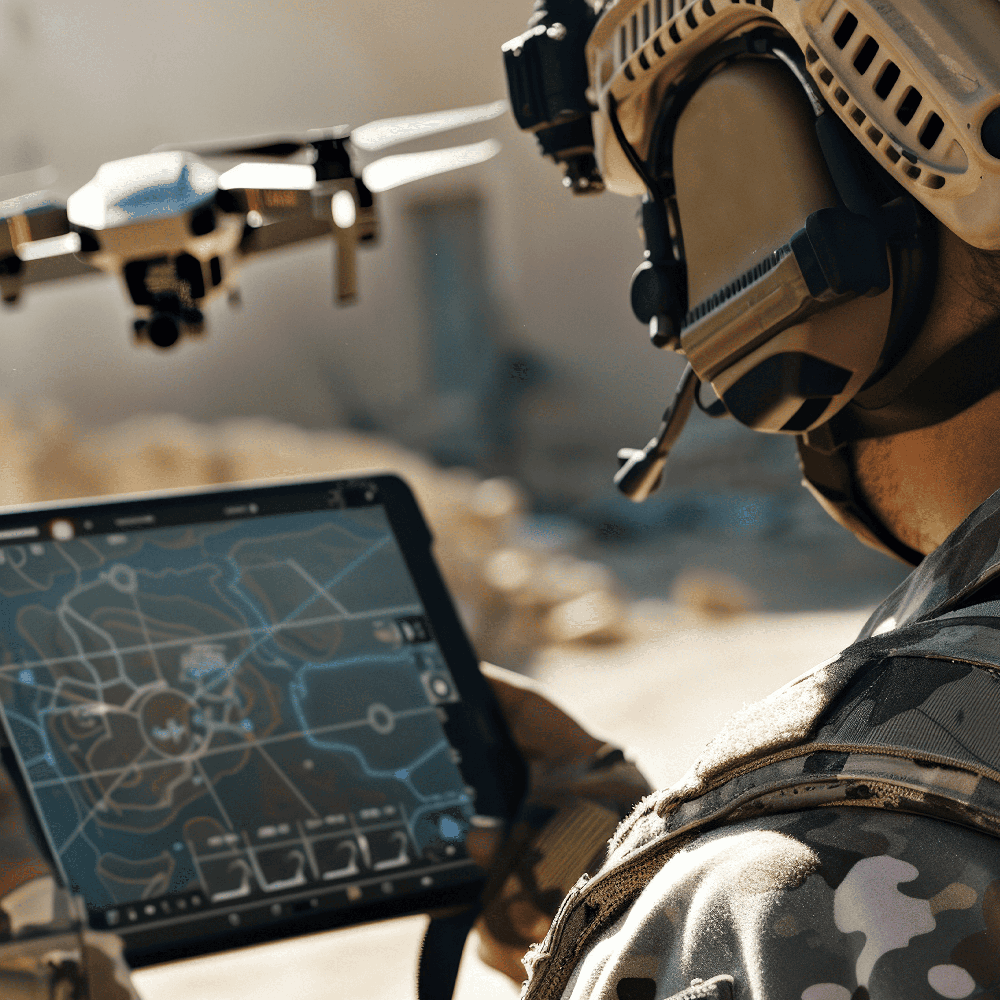
We verify the accuracy of sensor fusion and the reliability of AI decision-making mechanisms, which are critical for autonomous systems.
Systematic testing process for defence
Detailed analysis and planning
By defining rigorous requirements and specific test profiles (per MIL-STD), we create a detailed testing strategy.
Test preparation and execution
We configure specialized test benches (HIL, vibration chambers) and conduct tests under controlled conditions.
Data analysis
We subject the acquired data to in-depth analysis to confirm the functional integrity of the system and precisely identify potential anomalies.
Documentation and certification compliance
We prepare complete test reports and all documentation demonstrating compliance with all specifications, which is essential for final certification.
Eliminate the risk of failure
Don't leave reliability to chance. Contact us to gain the certification assurance that ensures the operational readiness of your critical systems.
FAQ
Do you perform testing in your own laboratories, or do you work with external accredited testing facilities?
We combine both. Internally, we have top-tier equipment for pre-compliance testing (climatic chambers, basic EMC measurements, vibration tables, HIL stations). Here, we subject the hardware to extreme stress and fine-tune it completely. For final, officially recognized protocols and certification (according to MIL-STD or STANAG), we fully manage the testing in accredited military laboratories, where we only send hardware for which we are confident in the results.
What is the main benefit of HIL (Hardware-in-the-Loop) testing for control software?
HIL testing allows us to simulate the behavior of a real military vehicle, drone, or weapon system in a digital environment and connect the physical control unit under development to it. This allows us to safely and repeatedly test critical scenarios (e.g., bus short circuits, engine failure, extreme interference) that would lead to the destruction of expensive equipment or endanger the crew in the real world. The result is 100% predictable code.
The MIL-STD-810 standard contains dozens of methods. Do you test according to the entire standard, or do you select specific ones?
We always customize testing based on the equipment's actual operational environment. Testing an armored vehicle's onboard computer for low-pressure resistance at high altitudes makes no sense if the device will never operate there. Based on the mission profile, we select specific test methods (e.g., Method 514 for vibration, Method 501/502 for temperature) to save you time and budget while still guaranteeing full compliance.
What happens if the hardware or software fails one of the internal tests?
That is the biggest advantage of having development, production, and testing all under one roof at Drudles. If we encounter a problem during pre-compliance testing (e.g., unexpected EMC emissions or a cracked solder joint during vibration), our engineers and developers immediately adjust the board or mechanical design. You don't have to run back and forth between a development agency and an external testing lab – we solve the problem internally, modify the prototype, and repeat the test.
Do you have any other questions?
Write to us and we will be happy to provide you with more information about our services.